Wayfinding in practice
Note
This page shows the wayfinding model at work on the assets. For its definition, parameters, defaults and limitations, and the terms used here (legible, known, learn, visited, frontier), see Models › Wayfinding. The intuition is on Concepts › Wayfinding.
This page follows §3 of the talk A Modular Workflow for Visibility-Aware Evacuation Modelling, one slide per section. Each section says what the code does, where, and which figure belongs there. Where the talk and the code disagree, a Talk vs code note says so, and the code is the reference.
Mechanisms were checked against main at f363758, which includes #170 and
#174; route_graph.py references follow the first-leg resample of #171. Each reported run outcome names its source: a repository test, an
asset README, a figure script, or a run on main by one of the investigations
of #160 and #168. None of the examples validates human wayfinding. They
verify that the implementation does what this page says.
The argument of the section is that route choice can only choose among
routes the agent knows, so what the agent knows is as much part of the model
as how it prices smoke. An agent starts with what its familiarity gives it.
After that, its map grows only through legible signs, or, with
--no-visibility, through every neighbour of the nodes it advances from.
1. A sign is more than a position
A node is a place. A sign tells someone standing elsewhere that the place
exists. Every exit, checkpoint and waypoint therefore carries a sign
descriptor \(\{x, y, \alpha_s, C\}\), authored or synthesised
(visibility.py, _default_sign, extract_sign_descriptors).
pyFDS-Evac does not compute legibility itself. It hands the descriptors to
fdsvismap, the implementation of
the waypoint method of Börger, Belt and Arnold (2024). fdsvismap precomputes,
for every sign, grid cell and stored time, whether the sign is legible there.
The rule, with its view-angle, obstruction and extinction factors, is on
Models › Wayfinding §1.
During the run the model only looks the answer up (visibility.py, VisibilityModel.node_is_visible).
A better visibility model in fdsvismap, or a C measured for a real sign,
therefore reaches the evacuation model without a change to the routing code.
C is set per sign. The code has one default, C = 3, for authored and
synthesised signs alike (visibility.py, _default_sign, _build_vismap, VisibilityModel.clear_air).
Talk vs code. The speaker notes say C defaults “to Jin’s 3 for reflective and 8 for lit signs”. The code has no default for lit signs; a sign gets 8 only if its author writes it. 3 and 8 are the FDS User Guide values. The Fundamentals page gives Jin’s ranges as 2–4 for reflecting and 5–10 for light-emitting signs.
Talk vs code. The slide says legibility is “evaluated from the agent’s actual position, not the source node centroid”. Periodic learning uses the agent’s stored position, which is the previous step’s (
scenario.py,run_scenario). Perception at spawn uses the spawn node’s routing point for all agents of that spawn area (cognitive_map.py,init_cognitive_map). The three sensing positions are tabulated on Models › Wayfinding §2.2.The reading distance \(V_{\max}\) and how to change it are on Models › Wayfinding §1.
2. One number flips the exit
The asset assets/exit_visibility_alpha isolates the bearing. It is a
corridor 4 m wide and 30 m long, with an exit at each end, and 40 agents at
familiarity 0 about 9 m from the near exit and 19 m from the far one. The two
configs differ only in the bearing of the near exit’s sign; the far sign faces
the agents in both (assets/exit_visibility_alpha/README.md).
With the near sign facing the agents (\(\alpha_s = 0\)), both exits are learned at spawn and the near one ranks first. With it facing away (\(\alpha_s = 180\)), \(A = 0\) at every agent cell, so the near exit is never learned. It is absent, not refused, so the all-refused fallback cannot restore it (Models › Wayfinding §2.4).
The tests pin the mechanism at router level
(tests/test_exit_visibility_alpha.py::TestExitChoiceFollowsLegibility::test_illegible_near_exit_never_enters_the_map,
::TestExitChoiceFollowsLegibility::test_the_near_exit_is_absent_not_rejected,
::TestExitChoiceFollowsLegibility::test_a_fully_familiar_agent_ignores_the_bearing).
Full runs of the asset follow the README’s recipe, which uses --fds-dir, so
legibility comes from the FDS vismap, not from clear air. In those runs all 40
agents take the near exit when the sign faces them, and all 40 take the far
exit when it faces away. With FDS 6.10.1 output of the smoke-free deck and
seed 1904, at 828ae8c3 (with --allow-fds-horizon-hold, because the FDS run
of the deck ends at 120 s):
| Near sign | Exit taken | Egress | Route switches |
|---|---|---|---|
| \(\alpha_s = 0\) | 40 to E_near | 17.57 s | 0 |
| \(\alpha_s = 180\) | 40 to E_far | 26.17 s | 0 |
The visibility cap is 30 m. Rerun in clear air with that cap, both configs give the same counts and egress times.
The ranked exit along the corridor (Figure 2) was shifted by #167: before #170 the switch from near to far fell at y ≈ 20.25. With the fix, clear-air ranking uses travel time measured from the agent’s position, and the switch is at y ≈ 15.0, midway between the two exits.
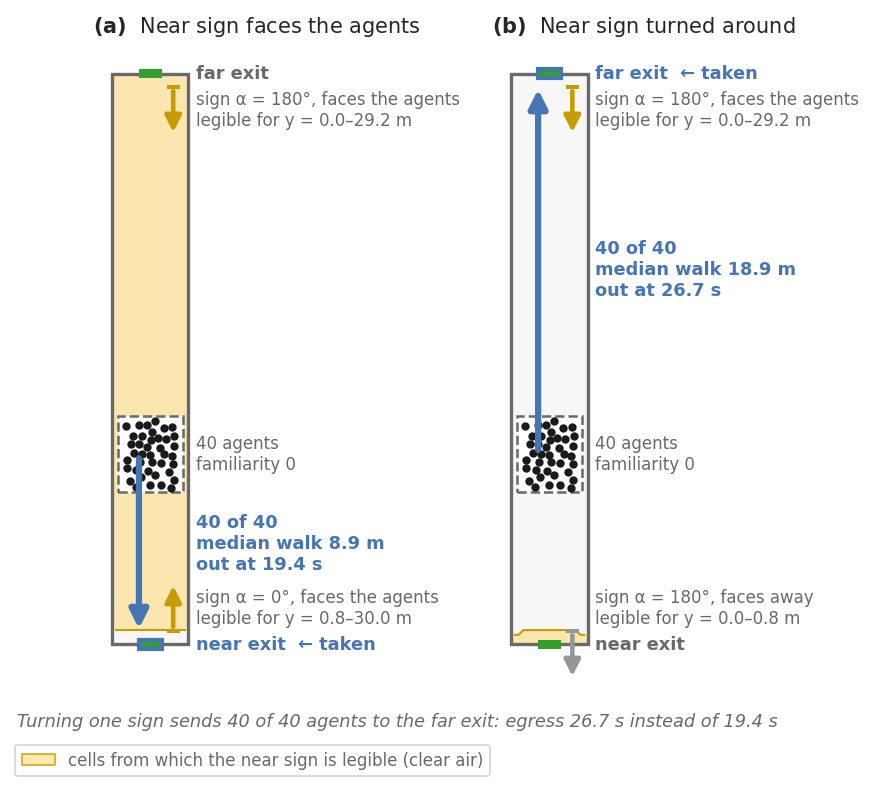
Figure 1. One number flips the exit. assets/exit_visibility_alpha: a
4 m × 30 m corridor, 40 agents at familiarity 0, run in clear air on the
0.25 m grid, seed 1904. The two configurations differ only in the bearing of
the near exit’s sign. Yellow: cells from which the near sign is legible. The
far sign is legible for y = 0–29.2 m in both panels. (a) \(\alpha_s = 0\): the
near sign is legible for y = 0.8–30.0 m; 40 of 40 agents take the near exit,
median walk 8.7 m, out at 17.6 s. (b) \(\alpha_s = 180\): the near sign is
legible only for y = 0–0.8 m; the near exit is never learned, and 40 of 40
agents walk to the far exit, median walk 19.1 m, out at 26.2 s. Counts, walks
and times are computed from the runs. Script:
scripts/figures/sign_bearing.py.
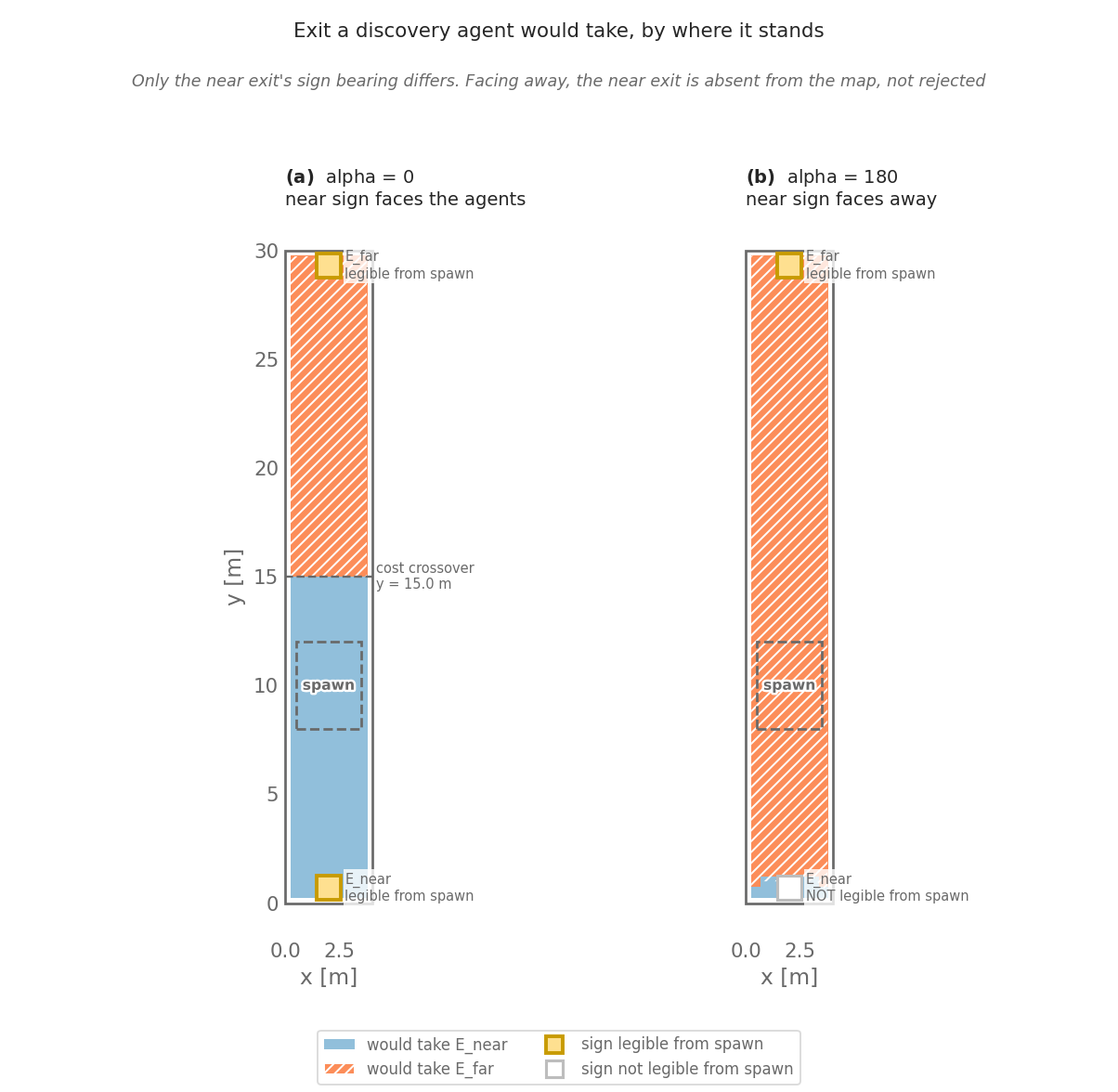
Figure 2. What routing would decide, by position. Each cell is shaded by the
exit that rank_routes ranks first for a discovery agent standing there,
given what it perceives from that spot: blue for E_near, hatched orange for
E_far. (a) \(\alpha_s = 0\): both exits are in the map, and the split is a
cost crossover at y = 15.0 m, midway between them. (b) \(\alpha_s = 180\):
there is no crossover; the near exit is absent from the map, so every cell
above the near sign takes E_far. The few near-exit cells at the bottom of
(b) lie south of the sign, in the half-plane it faces. Script:
scripts/generate_exit_visibility_map.py.
| \(\alpha_s = 0\) | \(\alpha_s = 180\) |
|---|---|
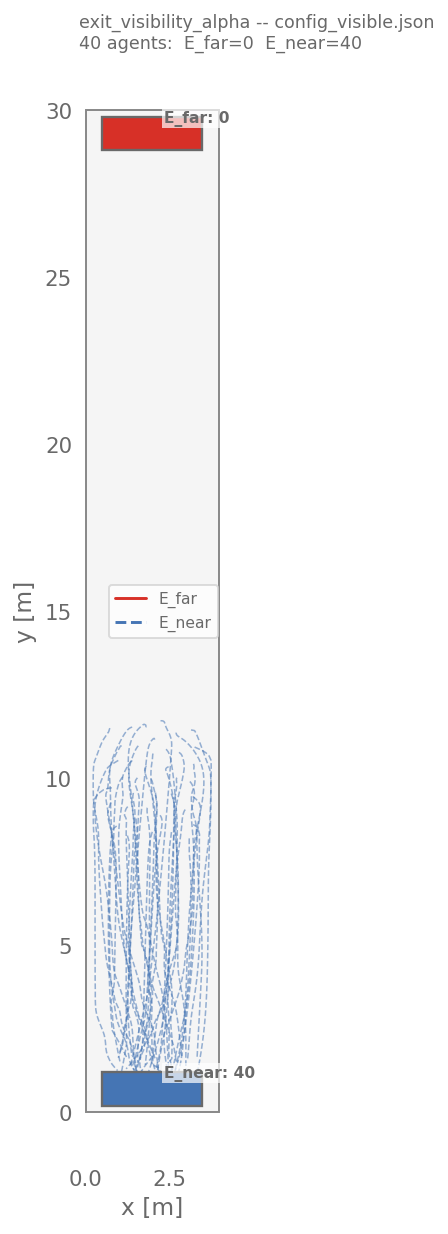 | 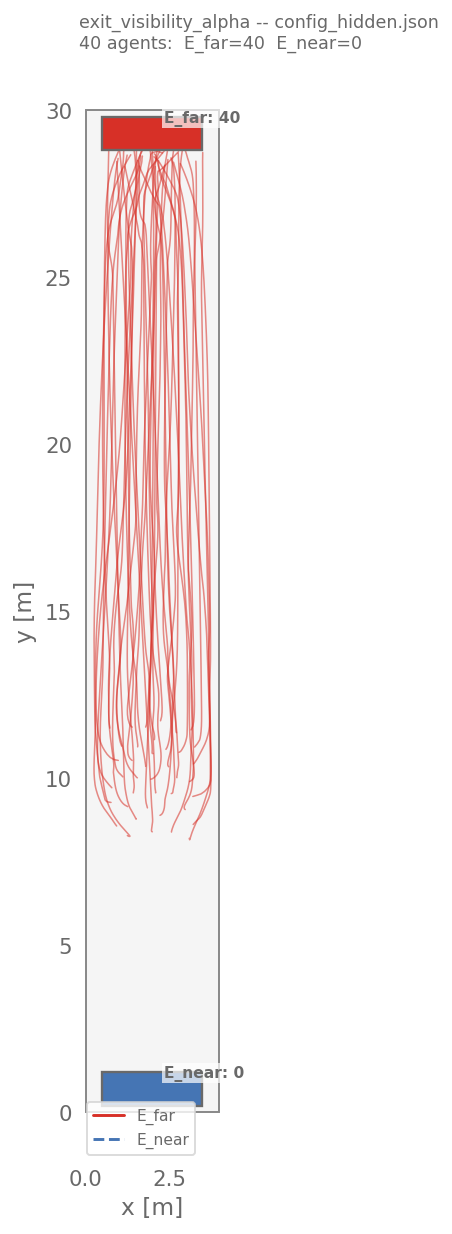 |
Figure 3. What the agents did. Trajectories of the FDS-backed runs in the
table above (FDS 6.10.1, clear air, seed 1904): 40 of 40 agents walk to
E_near when its sign faces them, and 40 of 40 to E_far when it faces away.
The trajectories are from those runs, at 828ae8c3; the clear-air runs of
Figure 1 give the same counts and times. Script: scripts/plot_trajectories.py
on the runs’ SQLite output.
3. What the agent knows
The talk draws wayfinding as a loop of three stages. The code has the same structure.
- Perception.
node_is_visible, called byexpand_from_visibilityandexpand_on_arrival. It is asked only about neighbours of one node (cognitive_map.py,expand_on_arrival,_expand_visible). - Knowledge.
AgentCognitiveMap: known nodes, known edges, visited nodes (cognitive_map.py,AgentCognitiveMap). - Decision.
rank_routesoncognitive_subgraph(map, graph)(route_graph.py,rank_routes), then the switching rules ofevaluate_and_reroute. With no reachable known exit, the spawn area’sno_known_exitmode: by default the default route, or exploration and the patrol (route_graph.py,_decide_no_known_exit). - The loop. Moving changes the stored position that the next periodic
learning uses (
scenario.py,run_scenario), and advancing along the path triggers learning at the node left behind (scenario.py,run_scenario).
The full contract, including what an agent that knows no exit does, the difference between ranking and adoption, and the learning schedule, is on Models › Wayfinding §2.
4. An empty map
The talk asks where an agent goes when it knows nothing and no sign is legible anywhere. Its intended answer: the agent has nothing to route to, explores, learns nothing new, and circles. That is why the map has to be filled by something, and the following slides show signs filling it.
The code does something else by default
(#610,
#91). An agent
that knows no exit follows the default route, as an FDS+Evac agent with no
known or visible door follows the flow field: the journey of its spawn area,
or without one the exit nearest its start on foot. The exit history flags the
exit it leaves through as not in its map. Exploration is an opt-in mode
(no_known_exit), and so are returning and standing. The rule is in
Models › Wayfinding §2.4.
Circling needs a patrol target under explore: at least one other known node
reachable over known edges. With a map that holds only the spawn node there is
none, and the agent stands. Whether the agent circles also depends on
connectivity and steering. That is the smoke case of assets/world_100 in
#122.
Talk vs code. The slide says the map “holds a single node” and “the agent circles”. By default the code sends that agent along the default route, and under
exploreit stands.scripts/figures/empty_map_routes.pychecks both.
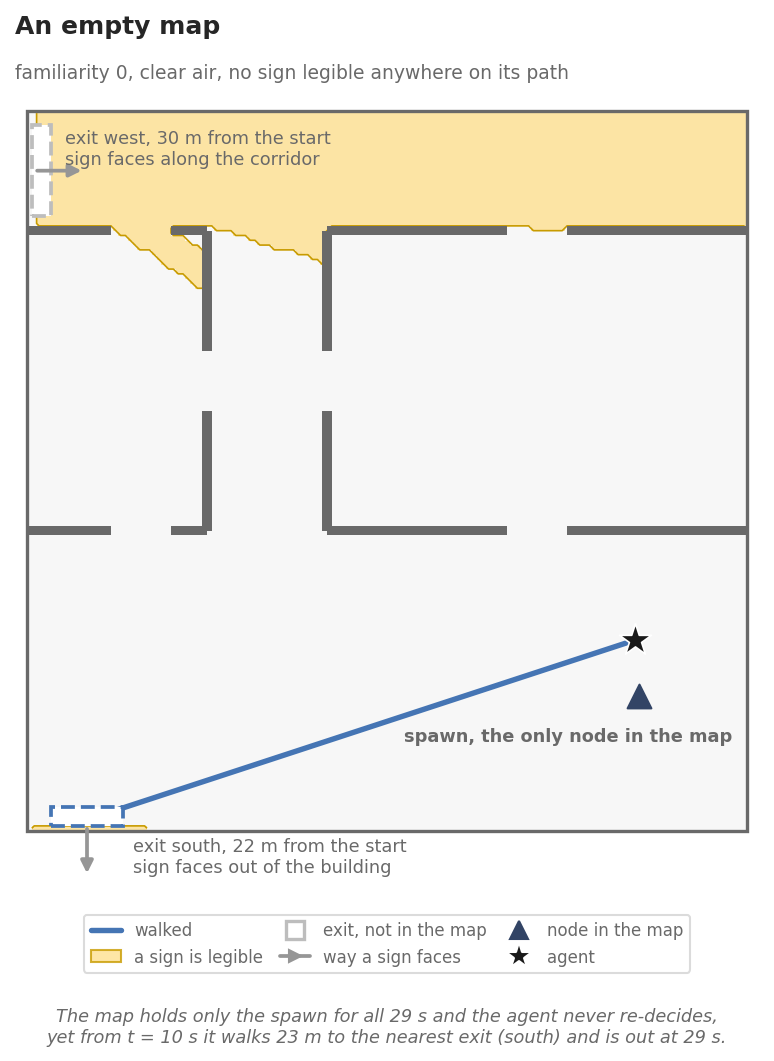
Figure 4. An empty map. One agent at familiarity 0 with a clear-air
visibility model. Yellow: cells from which a sign is legible. The south exit,
23.7 m on foot from the start to the middle of its doorway, has a sign facing
out of the building; the west exit, 32.0 m on foot, has a sign facing along
the corridor behind walls. The map holds only the spawn for the whole run.
After the default 10 s pre-movement the agent takes the default route, the
exit nearest on foot: it walks 22.1 m to the south exit, which it does not
know, and is out at 27.7 s. The exit history flags that exit as not in its
map. With no_known_exit set to explore, the agent has nothing to explore
and stands. Script: scripts/figures/empty_map_routes.py.
5. Per-agent cognitive maps
The talk calls this slide “staff know the building, visitors discover it”. In the code there are no staff and no visitors. There is a familiarity value per group; at \(p = 1\) the agent is given the whole graph, which is an assumption about the agent, not a model of training. How the map starts and grows is on Models › Wayfinding §2.1–2.2.
The talk illustrates this on a T-corridor with a junction and two exits. In
that schematic the discovery agent learns the junction at spawn and both exits
at the junction. Smoke then fills the right arm, and the agent heads for exit A.
In the code, whether exit B is refused depends on its route’s optical depth
exceeding the gate budget. Legibility of B’s sign plays no part in that
(route_graph.py, GatePolicy.feasibility).
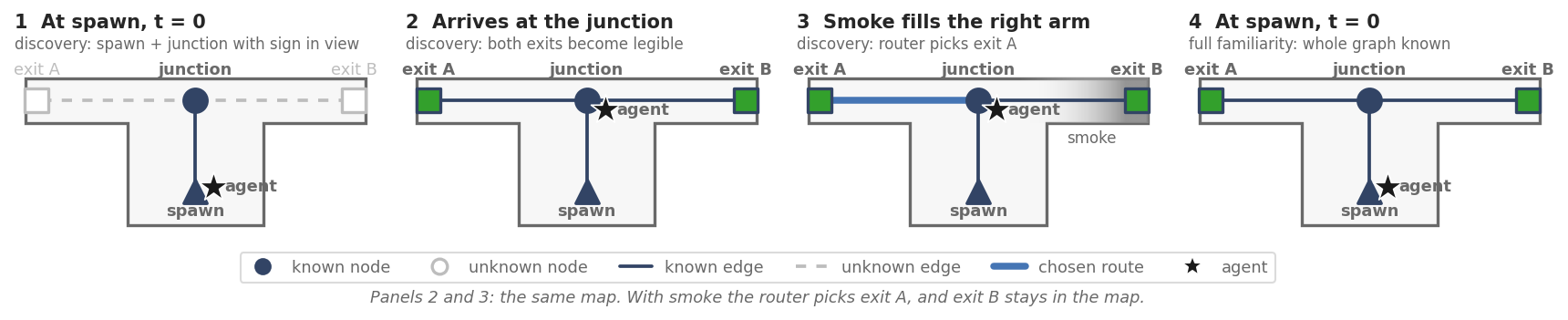
Figure 5. Schematic, not a simulation: known sets and choices are drawn by
hand. A T-shaped corridor; filled nodes and solid edges are known. (1) A
discovery agent at spawn knows its spawn node and the junction, whose sign is
legible from there. (2) At the junction both exit signs are legible, and both
exits are learned. (3) Smoke fills the right arm. Exit B stays known; if its
route exceeds the exposure budget, the gate refuses it and the agent heads for
A. (4) A fully familiar agent knows the whole graph at t = 0. Script:
scripts/figures/cognitive_map.py.
Talk vs code. Panel 2 says “every neighbour whose sign is legible from the new node”. The code tests legibility from the agent’s position when the path advances (
scenario.py,run_scenario).Talk vs code. The slide says “Learned edges are bidirectional”. That holds only for edges learned by perception and arrival, and only where the graph has the reverse edge. With automatic wiring, exits have no outgoing edges. Paths learned from familiarity or
entranceare forward only (cognitive_map.py,_learn_route_to,_learn_edge).Talk vs code. The slide calls
full“the FDS+Evac default”. It is pyFDS-Evac’s default. FDS+Evac’sKNOWN_DOORdefaults to.FALSE.(evac.f90:2291,:2733).
6. The map remembers
A known node stays known after its sign stops being legible. A visibility query cannot do that on its own, because it answers only for the present position and time.
The asset assets/cognitive_map_memory separates the two. A corridor has an
end exit, legible from spawn, and a side exit whose sign, at \((4, 20)\)
facing west, is legible from the centreline only inside a region. The asset
builder’s estimate, y ≈ 12.5–27.5 m, follows from the 30 m cap
(assets/cognitive_map_memory/build_geometry.py, MAX_VIS_M, legibility_window). On the 0.25 m clear-air grid the model
reads the sign from y = 12.3 to 27.8 m on the centreline (Figure 6); the
difference comes from the rasterised sight line.
The probes place one discovery agent at fixed positions on the centreline, in
sequence, and ask the router which exit ranks first there. They are sequential
state probes, not a walked trajectory. The tests assert four things
(tests/test_cognitive_map_memory.py):
- Learning. The side exit is unknown at y = 8 and known at y = 14
(
::TestAcquisitionAndPersistence::test_side_exit_is_acquired_on_entering_the_window). - Memory. At y = 30 the sign is not legible, and the side exit is still
known and routable (
::TestAcquisitionAndPersistence::test_side_exit_persists_after_its_sign_goes_illegible,::TestAcquisitionAndPersistence::test_a_remembered_exit_is_routable_though_illegible). - Control. A probe that never enters the region never learns it
(
::TestAcquisitionAndPersistence::test_an_agent_that_never_enters_the_window_never_learns_it). - Ranking. The side exit ranks first at y = 14, the end exit at y = 30
(
::TestAcquisitionAndPersistence::test_acquiring_the_side_exit_changes_where_the_agent_would_go).
::test_map_memory_probes_match_engine pins the whole northbound sequence.
The probes use the test’s clear-air setup, which has no routing engine, so the
distances are straight lines.
| y [m] | side exit | first-ranked exit |
|---|---|---|
| 4 | unknown | end |
| 10 | unknown | end |
| 14 | known, legible | side |
| 20 | known, legible | side |
| 26 | known, legible | end (5.30 m against 6.50 m) |
| 30 | known, not legible | end |
The two distances are equal at y ≈ 25.4. At every probe where both exits are known, the distance from the agent to each exit is shorter than that route’s first leg from the spawn node (16.3 m to the side exit, 27.3 m to the end exit, from the test’s comment). The #167 cap is therefore inactive here. We checked this by hand.
Memory therefore shows on the way north as known and routable, not as
first-ranked. It changes the ranking on the way back. Probed again at
y = 10 after the northbound sequence, the side sign is still not legible
there, but the side exit is known and nearer (10.31 m against 21.30 m), and it
ranks first. At the same place before learning, the end exit ranked first.
::test_map_memory_probes_match_engine pins this return probe too.
In a moving agent, ranking is not adoption: the switching rules can keep a
current exit that no longer ranks first
(Models › Wayfinding §2.4).
In the full run of the asset README, with the FDS vismap, all 20 agents
left by the side exit, egress 21.5 s, each after one switch from the end exit
to the side exit (assets/cognitive_map_memory/README.md).
Talk vs code. The slide says the side exit is learned “at y = 12.5” and “at y = 30 … the agent still routes to it”. 12.5 m is the builder’s 30 m estimate. The first test probe inside the region is at y = 14. At y = 26 and 30 the end exit ranks first. This follows from #65, which prices routes from the agent’s position (see #160).
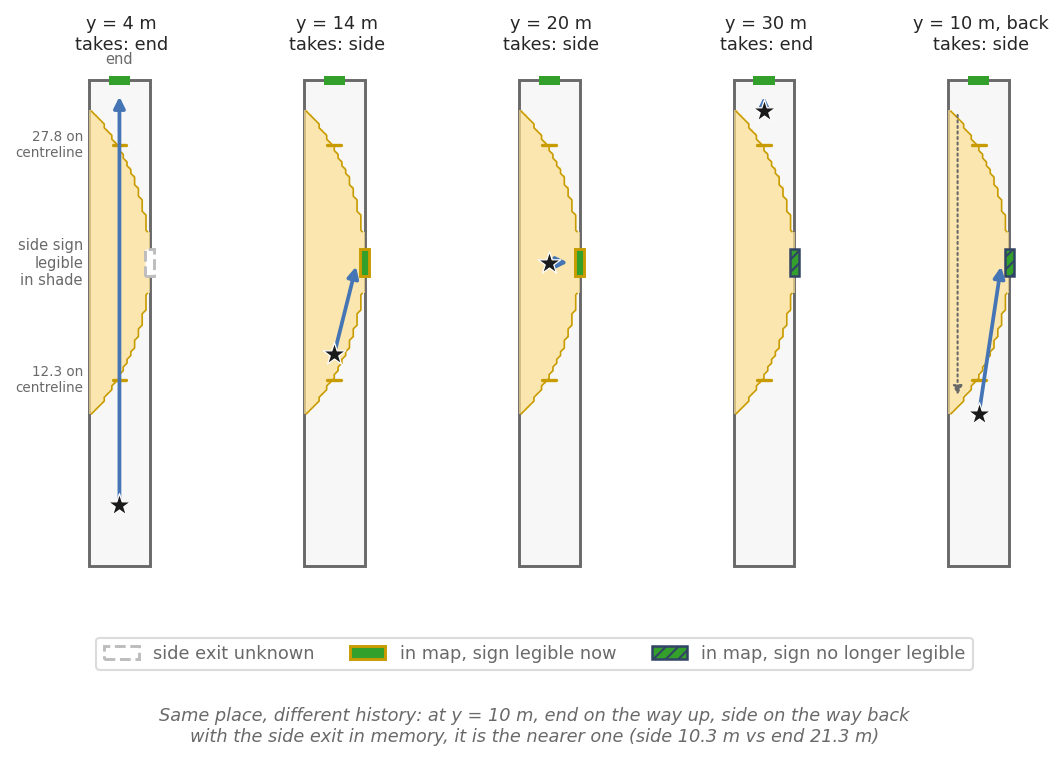
Figure 6. The map remembers. assets/cognitive_map_memory, clear air, one
discovery agent probed in sequence at y = 4, 14, 20 and 30 m, then at y = 10 m
again. These are state probes, not a walk. The shaded, lens-shaped region is
where the side sign is legible; on the centreline it spans y = 12.3–27.8 m
(gold ticks). Northbound, the side exit is learned inside the region and
stays known beyond it. At y = 30 the nearer end exit ranks first. At the return
probe, where the side sign is not legible, the known side exit is nearer and
ranks first. At that place before learning, the end exit ranked first. Each
ranking is computed by rank_routes. Script: scripts/figures/map_memory.py.
7. Full versus discovery
The talk compares the two tiers on the same geometry, seed and signs. One thing differs in the code, and until #174 a second one did:
- The initial map. A fully familiar agent knows the whole graph. A
discovery agent of this deck explores (it sets
no_known_exittoexplore): it takes the frontier with the lowest path cost from its position, learns as the path advances, and, with no frontier left, first walks to its node’s point and looks from there; only if that teaches it nothing does it patrol its known nodes (Models › Wayfinding §2.4;cognitive_map.py,nearest_frontier_target,wander_target). Route history logsreason="explore"andreason="wander"(route_graph.py,_decide_explore). The look writes no row; in Figure 7 no agent patrols, so none logswander. - The ranked length of the first leg (#172, fixed by #174, now merged), measured as a straight line, even through walls, for discovery agents; see Models › Wayfinding, Limitations.
Before #174, a comparison around obstacles mixed the effect of knowledge with the effect of #172. The run of Figure 7 gives the same numbers before and after #174. For both tiers, the first leg’s smoke is resampled along the walked path from the agent to its next node, the path that also measures the first leg’s length (#171). Since 0.5.0 the dose of a walk behind the route’s origin node is charged as well (#171).
The patrol can stall: when smoke limits legibility to a few metres, a patrol over a few known nodes may never pass a legible new sign (#122).
Discovery times depend on the grid. On
assets/familiarity_test_discovery, an SFM deck (SocialForceModel;
Movement models), seeds 1–30,
the grid study of the
familiarity verification (criterion
6, at c619a046) gives the following last-out times of the discovery tier,
read from the simulation clock, with a run that does not finish counted as
300 s:
| Clear-air cell | Median | P90 | Runs not finished (#359) |
|---|---|---|---|
| 0.25 m (does not resolve the walls) | 75.7 s | 104.6 s | 3 of 30 |
| 0.1 m | 74.6 s | 85.4 s | 2 of 30 |
| 0.05 m | 74.7 s | 300 s | 4 of 30 |
| 0.025 m | 75.5 s | 104.3 s | 3 of 30 |
The fully familiar tier took 34.9 s at seed 420. The code advises a cell smaller than the
thinnest wall and warns when it is not (visibility.py, VisibilityModel.clear_air). The #168 investigation recommends at
most half of it, as guidance: 0.05 m for the 0.1 m walls of this deck. The
median changes by at most 1.1 % at both halvings. The P90 fails the 5 % rule at
both, because deadlocked runs count as 300 s; without them it changes by
−3.0 % from 0.1 to 0.05 m and +1.1 % from 0.05 to 0.025 m. Since
#726 (0.5.0) the
deadlocks end 12 of these 120 runs, against 4 before
(#168, open).
Do not quote a discovery egress time without its grid.
The talk also shows discovery with and without sign gating on the NIST floor
plan of The Station (assets/station_fahy). With --no-visibility, advancing
from a node teaches every neighbour. With a visibility model, only neighbours
with legible signs are learned, so walls and bearings cut the known set even
in clear air. The talk’s counts (8 of 11 and 3 of 11 nodes) were not
reproduced for this page.
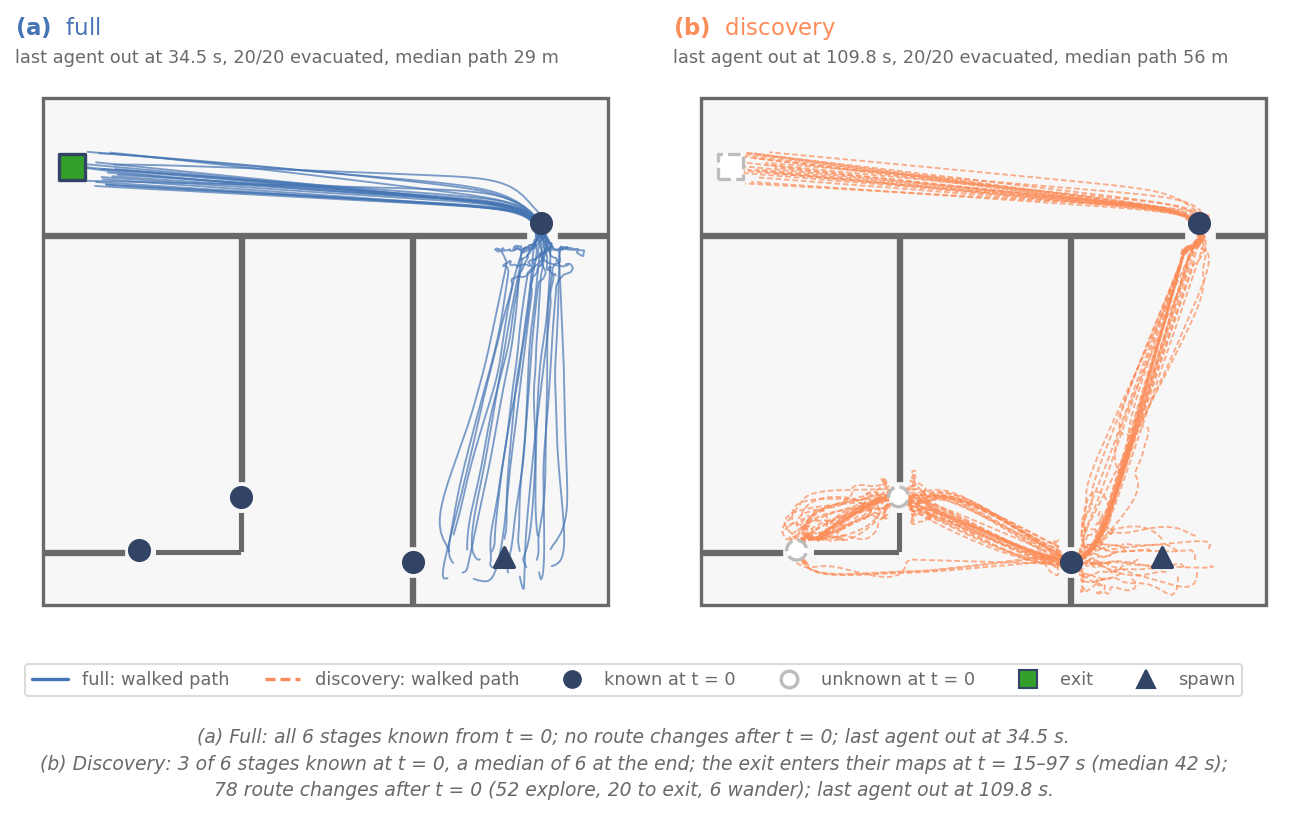
Figure 7. Full versus discovery. assets/familiarity_test_full and
assets/familiarity_test_discovery: 20 agents, seed 420, same geometry and
signs; familiarity differs. Clear-air grid 0.05 m. (a) Full: 6 of 6 stages
known from t = 0, no route changes; the last agent leaves at 34.9 s, median
path 28 m. (b) Discovery: 3 of 6 stages known at t = 0, a median of 6 at the
end; the exit enters the maps at t = 28–72 s (median 46 s). After t = 0 the
agents make 79 route changes (59 explore, 20 onto the exit), all 20
with a detour into a dead-end room; the last leaves at 84.6 s, median path
57 m. Over 30 seeds the discovery time meets the convergence criterion from
0.05 to 0.025 m on this sample (the 90 % interval of the P90 change reaches
+10 %) but not from 0.1 to 0.05 m
(criterion 6; #168). This illustrates the mechanism; it is not a result. Script: scripts/figures/full_vs_discovery_paths.py.
Talk vs code. The talk caption gives 35.1 s and 75.1 s. Those are results from the deck before its rework in #99 (
docs/testing-familiarity.md). The world_100 clip (“42 signs”) and the Station clips were not reproduced for this page, and their decks and commits are not recorded.
References
- Börger, K., Belt, A., & Arnold, L. (2024). A waypoint based approach to visibility in performance based fire safety design. Fire Safety Journal, 150, 104269. doi:10.1016/j.firesaf.2024.104269
- Haensel, D. (2014). A knowledge-based routing framework for pedestrian dynamics simulation. Diploma thesis, TU Dresden.