Notes
Analyses, simulation studies, and commentary from the pedestrian dynamics community.
Can a model move like museum visitors and still take the wrong paths?
From a phone video of the Guggenheim Bilbao atrium we extracted 331 visitor trajectories and rebuilt the scene in JuPedSim. The model matches how visitors move, but not where they spend their time.
Read more →Calibrating a pedestrian model against real data, part 2: where it stops
The parameters calibrated on a wide bottleneck in part 1 go to a half-metre gate and an unguided entrance. One set stalls, the other is too fast, a recalibration disagrees with the first, and no tested static parameter slice reproduces low motivation. What that means for anyone who runs pedestrian simulations.
Read more →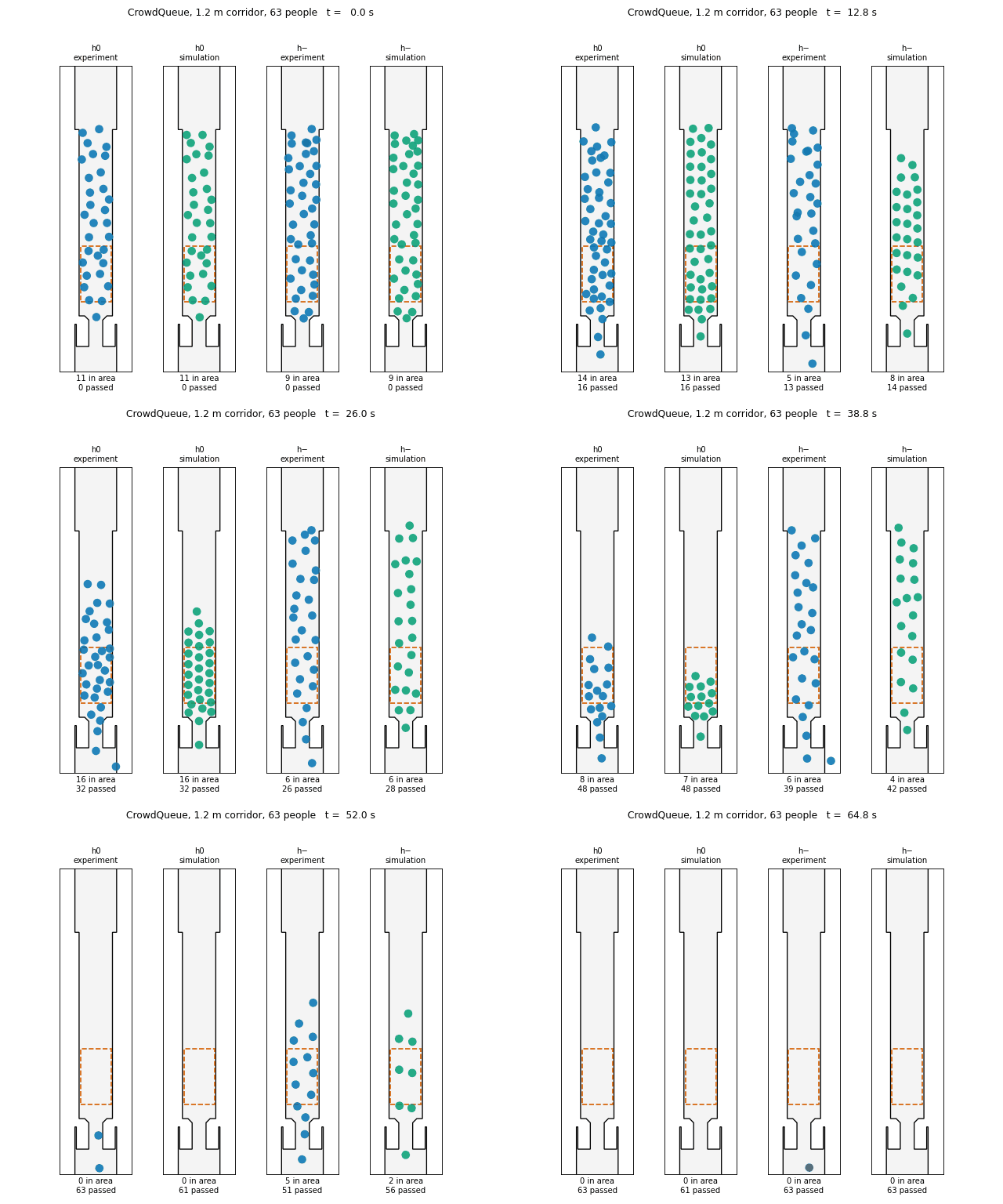
Calibrating a pedestrian model against real data, part 1: the bottleneck
We calibrated JuPedSim’s Collision Free Speed model with Dakota on an open bottleneck experiment and checked the result on two widths the optimizer never saw. The defaults miss the flow by a factor of two. Calibration brings it mostly within ten percent, though neither calibrated set passes the stated tolerance everywhere, and two optimizer starts give two different parameter sets.
Read more →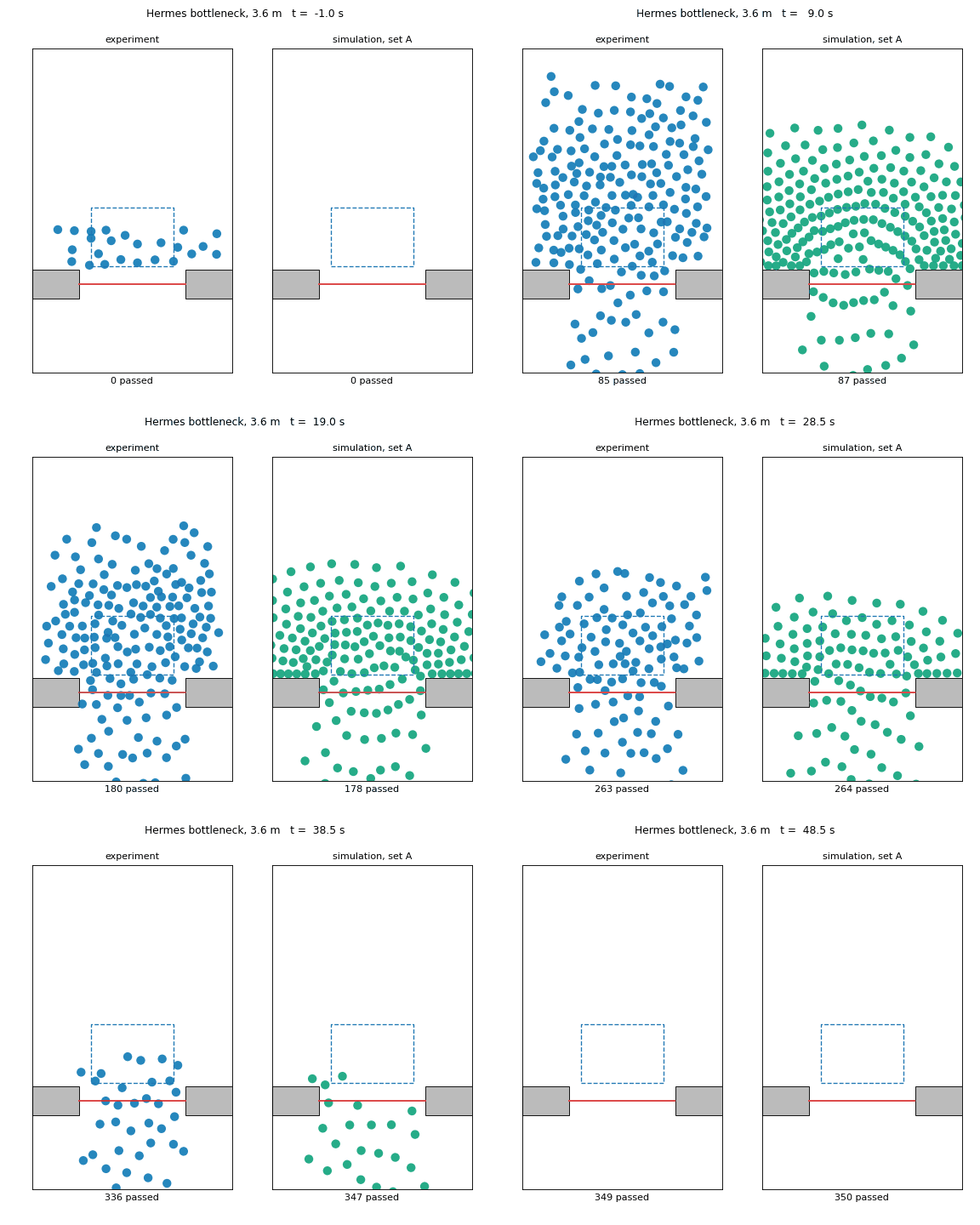
Why do roaming crowds drift counterclockwise — and where?
A Nature Communications paper reports that freely roaming crowds drift counterclockwise. We rebuilt the experiment in simulation to test whether a slight individual left-turn bias explains it.
Read more →Why don't airlines board planes the optimal way?
The mathematically optimal boarding method has existed since 2008. We rebuilt the classic studies in JuPedSim to see why it stays on paper.
Read more →